The goalkeeper role in field hockey sits under a strange kind of pressure. You see the whole field, yet one mistake in the circle can shape the match. Playcric does a good job of illustrating the tension in sports as a way to keep focus on the small aspects of a game that help determine who wins or loses.
As far as player role, a goalie in field hockey does much more than block shots. They have to be able to read player movement, anticipate plays before they happen, and have the ability to communicate with their teammates early so they can set the defence. Goalies also must have the ability to remain calm under pressure.
In this Playcric guide, the goalie position is broken down into two areas: tactics and psychology, as well as information about how to prepare for penalty corners and strokes, fitness, and overall “understanding of the game”.
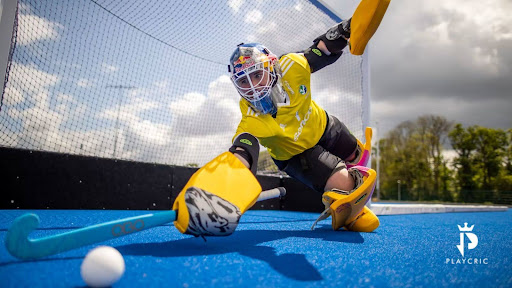
Goalkeepers in field hockey serve as the last line of defence. Although it may seem relatively easy, it is really not that simple. When a goaltender is located within the circle (ie, on the ice), he will stop the ball using his hands, feet, legs, body, and/or protective equipment. However, when he is located outside the circle (ie, off the ice), he will stop the ball using his stick per normal field rules.
That makes the goalkeeper role unique. The position asks for strong reactions, good timing, and clear judgment. It also asks for discipline, because a rushed move often opens the goal.
Moreover, a goalkeeper should wear the following things properly, which include headgear, leg guard, kickers, and hand protector. Some teams also use a player with goalkeeping duties in a lighter setup. Both options change how the defence works. Both demand awareness.
The main responsibilities are clear.
- Stop direct shots.
- Block rebounds.
- Organize defenders.
- Call danger early.
- Control the circle under pressure.
This is why coaches treat the goalkeeper role as a specialist position. The keeper does not only react. The keeper also guides.
Tactical awareness behind the posts
Nevertheless, good goalkeepers do not wait for danger to appear. They read the game before it reaches the circle. That starts with scanning, which is more like looking through the field to know where the attackers and defenders will play.
The keeper who scans early has time. The keeper who waits has trouble.
In a regular formation like (1-3-4-3), the goalie is in the back and is the last defence. Conversely, the goalie should be calculative enough to judge the position of the ball. When pressure builds, the keeper should already know which player needs support.
A simple practice habit helps here.
- Scan before every restart.
- Scan when the ball moves across the field.
- Scan again when the attack enters the circle.
- Speak before the threat becomes urgent.
That habit sounds small. Still, it changes the game.
The mental game behind the posts
Likewise, the goalkeeper role carries a heavy mental load. Outfield players lose the ball and recover. A keeper makes one error, and the whole crowd sees it. That reality creates pressure.
Consequently, research on goalkeepers in sport often points to strong self-criticism and intense focus on mistakes. The brain keeps replaying one bad moment. So the keeper has to learn how to handle that noise.
A better mindset starts with a simple rule. Think about what the next move is and not about the previous one. That sounds easy. It is not easy. Still, it works.
Three habits help build control.
- Use short self-talk.
- Keep your focus on the ball.
- Review how you played after the match is over, do not think about it when the game is ON.
Journaling also helps. After a game, write down saves, rebounds, poor reads, and strong decisions. We find this useful because it turns feelings into notes. Notes are easier to work with than worry.
Post-goal reset routine
A goal against you does not need a long emotional response. It needs a reset. Good keepers train a simple routine so the mind clears fast.
Use this three-step reset.
- Breathe once and settle your body.
- Use one anchor word like “set” or “next”.
- Lift your posture and return to your stance.
Body language matters here. A keeper who stands tall sends a clear message. A keeper who looks broken gives the attack extra confidence. That part is tactical, not cosmetic.
This reset should be trained in practice. If you only think about it after conceding, it will arrive too late. Repetition builds the habit.
Penalty corners and the keeper’s role
In particular, penalty corners test every part of the goalkeeper role. The ball comes fast. The defence has little time. The keeper has to read the injection, judge the strike, and stay connected to the team shape.
A penalty corner is a set piece taken from the edge of the circle after a defensive foul. The attacking side tries to create a clean shot on goal. That is where keepers earn their money.
The main cues are simple.
- Watch the injector.
- Read the stick position.
- Track the body lean.
- Expect the drag flick or the hit.
- Stay ready for a deflection.
Video study helps here. When a goalkeeper studies an opponent before the match, patterns become easier to read. Some flickers always open their shoulders the same way. Some prefer one side. Some delay the strike by a split second. That detail matters.
Undoubtedly, communication also matters in set pieces. The goalkeeper should tell the first runner where to stand, when to rush, and when to hold. A quiet defence during a corner usually pays for it.
Saving the penalty stroke
A penalty stroke in field hockey is a direct one-on-one chance from the stroke mark. The rules are strict. The goalkeeper must stay on the line until the ball is played.
That makes the stroke different from a football penalty. The keeper cannot commit early. The move has to be reactive and clean.
A good starting stance looks like this.
- Feet shoulder-width apart.
- Weight on the front of the feet.
- Hands ready and balanced.
- Stick low.
- Eyes fixed on the attacker’s body and stick.
The pressure is obvious. The attacker wants control. The keeper wants patience. In that moment, the first clue usually comes from body lean and stick angle. The keeper who holds shape often gets a better chance at the save.
Communication as defensive control
A goalkeeper sees more than anyone else on the field. That view should be used. Silence leaves gaps. Short calls close them.
Useful calls include:
- Man on.
- Time.
- Push left.
- Hold.
- Line.
These calls should be agreed before the season starts. If everyone uses the same words, the defence reacts faster. That is where trust grows.
Good communication also stops easy one-on-one chances. When the keeper warns early, the defender moves earlier. That small gain often prevents a bigger problem.
Physical preparation for goalkeepers
To explain, goalkeeper fitness is different from outfield fitness. A keeper does not need endless running. A keeper needs sharp bursts, strong legs, flexible hips, and quick hands.
A smart training week should include:
- Agility ladders.
- Reaction ball drills.
- Split squats.
- Core work.
- Lateral movement practice.
Warm-ups matter, too. Start with light movement, then add mobility, then finish with fast shots. The body has to wake up before the first attack arrives.
It also helps to set a goal for each session. For example, “every clearance goes wide and flat.” That keeps training honest and focused.
Fuel for focus
A goalkeeper should be given proper fuel for the body. As long as a keeper will spend very little time running than a midfielder, so in these instances, the mental sharpness will drop without energy.
A simple pre-match meal two hours before the game will help in continuing the game properly. Carbohydrates will help to focus on the game properly. Heavy, oily or high fibre meals can slow down the game.
Water matters too. If the body starts dull, decisions slow with it.
After the match, protein helps repair muscles from diving, pushing, and sudden stops. Recovery should stay simple and regular.
Building game IQ off the field
Clearly the best keepers keep learning when training ends. Watching matches builds pattern recognition. It helps you see how top goalkeepers move before the ball is even struck.
This proves that Playcric fits this topic well. It keeps fans and players close to live matches, and that makes it easier to study shape, timing, and pressure moments while they happen.
A good habit after watching a match is this.
- Write one good keeper decision.
- Write one choice you would change.
- Write one thing to train this week.
That small routine builds game IQ over time.
The lonely side of the role
The goalkeeper role often feels isolated. Keepers train differently from the rest of the team, and that difference can feel heavy. Some sessions become little more than repeated shots. That can wear on confidence.
The fix is practical. Ask for keeper-specific drills. Work with a coach or mentor. Stay in touch with other keepers. Use Playcric and similar match coverage to stay connected to the sport when you are not on the pitch.
Being different is part of the job. The keeper stands apart, thinks apart, and carries different pressure. That is normal.
Conclusion
The role of a goalkeeper is more like a cocktail with a mix of precise timing to keep control of the ball, shape the game, have mental control, be emotionally aware, have more situational awareness about the game, and stay ready for the next ball. If you are an aspiring hockey player or an enthusiast, this blog will be a complete knowledge hub for you to understand the different aspects of the game. Clearly follow Playcric for more insights into other popular games and stay close to the game.
Frequently Asked Questions
- What is the goalkeeper role in field hockey?
The goalkeeper role is to stop shots, protect the goal, and direct the defence inside the circle. - Why is scanning important for goalkeepers?
Scanning helps a keeper read movement early and prepare before the ball reaches the circle. - How does a goalkeeper reset after conceding?
Breathe, use one short anchor word, and return to a tall body shape. - What makes penalty corners hard for goalkeepers?
The ball moves fast, the strike type changes, and the keeper has very little time to react. - How does Playcric help hockey fans and players?
Playcric keeps them close to live matches, so they can watch patterns, study decisions, and build game IQ.