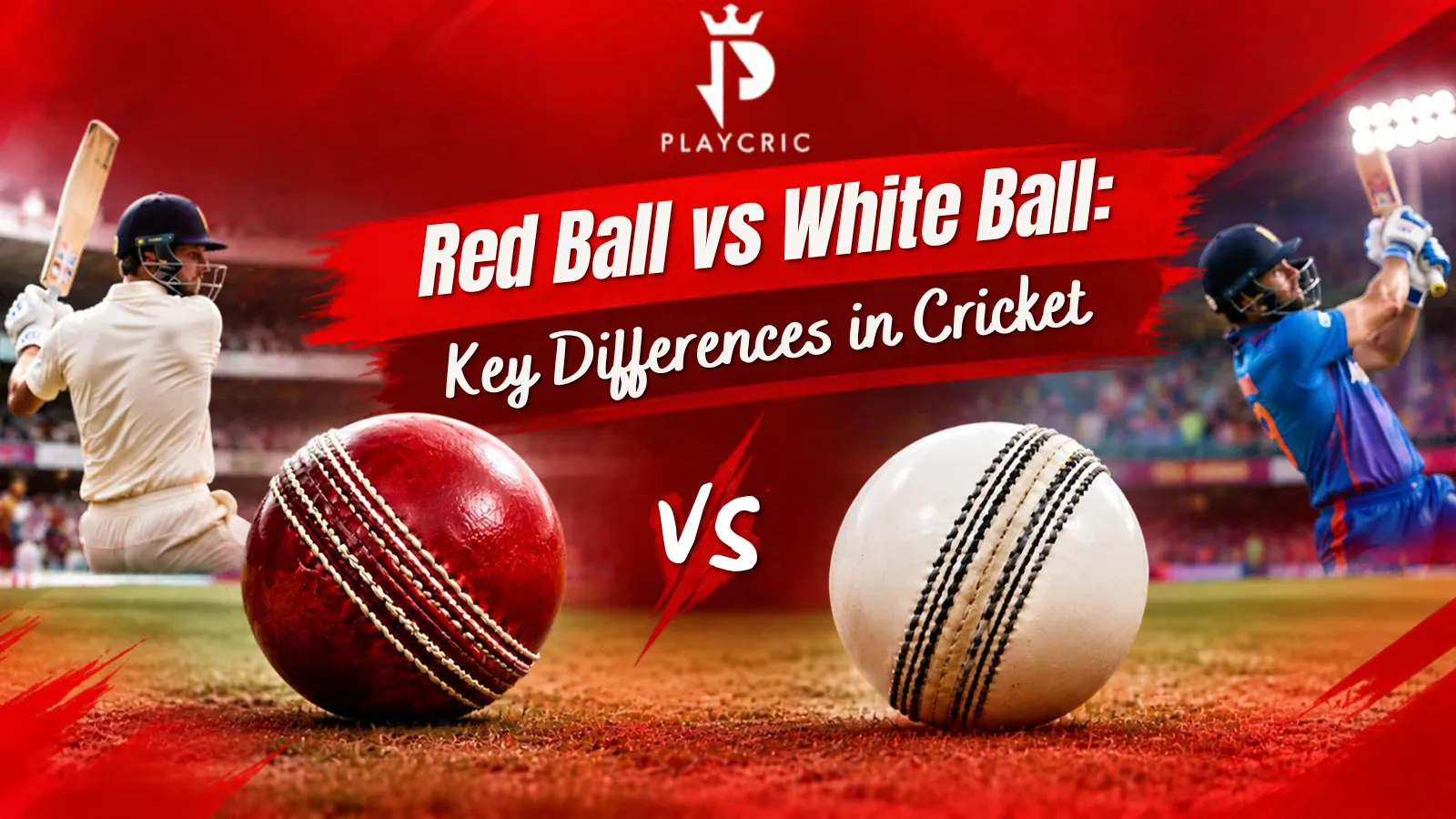
Cricket uses different ball colours because each surface acts differently in changing light. The Red Ball vs White Ball topic matters because colour changes sight, swing, and match plans. A red ball suits long daylight matches, while a white ball helps short matches under lights.
Why Cricket Uses Different Balls
Types of cricket balls are required due to the fact that players require clarity of vision at all times. The red balls are ideal for playing in the day time whereas the white balls remain visible in the case of floodlights. Also, manufacturers apply different polish on different balls, thereby affecting the wear of leather.
A cricket ball has a cork core, twine layers, leather, and a raised seam. However, the outer finish differs a lot between red and white balls.
Red Ball Cricket: Made for Long Matches
This game uses the red ball type that is primarily used in Test games, in which one ball may serve for several overs. The leather takes time to wear out hence allowing reverse swing to be developed by expert bowlers. Furthermore, the red surface keeps shine on one side for conventional swing early on. As a result, bowlers can use different plans across many sessions.
The red ball usually lasts longer than the white version. It can stay in play for around 80 overs in many Test conditions. Also, its clear seam helps bowlers get movement after the ball pitches. Therefore, captains often keep slip fielders and use attacking field positions early. Playcricnews blog explains the real differences in a clear and simple way.
How the Red Ball Acts
- It swings when one side stays shiny and the other side turns rough.
- It allows reverse swing once the older surface becomes uneven.
- It keeps its shape well during long spells of fast bowling.
- It gives spinners a clear seam to hold during long periods.
Meanwhile, red balls can become hard to see during fading light. This sight problem led cricket officials to use pink balls for day-night Test matches. Still, the red ball remains the top choice for daytime Test cricket because it wears in a steady way.
White Ball Cricket: Made for Floodlights
White-ball cricket entails ODI cricket and T20 cricket matches played under lights. The brightly colored surface creates contrast with the clothes of the players and the darkening sky. In addition to this, the ball is polished well to make sure that it travels well in the air.
But there is another effect of the polishing. White balls tend to wear down sooner than other colors, especially on dusty or hard pitches. For this reason, the umpire can replace the ball when it gets dirty or discolored. In One Day Internationals, teams also use two new balls from opposite ends.
How the White Ball Acts
- It can swing more during the first few overs.
- It loses swing early because its polished surface wears fast.
- It becomes harder to see once dirt covers the white leather.
- It leads to bold batting because field rules reward quick scoring.
That is why the bowlers endeavor to make an early strike before the ball becomes easier to play. On the other hand, the batsmen tend to go for the attack after the middle overs since the shine on the ball is now gone.
Red Ball vs White Ball: The Main Differences
The difference between red ball and white ball starts with sight but goes much further. Both balls have a similar size and weight, yet their outer coats act differently. According to BBC Sport, red balls use less lacquer, while white balls get an extra polished layer.
| Feature | Red Ball | White Ball |
| Main format | Test cricket | ODIs and T20 matches |
| Best sight | Daylight | Floodlights and evening play |
| Outer finish | Leathery and darker | Smooth, bright, and polished |
| Swing pattern | Early and reverse swing | Strong early swing, then less movement |
| Durability | Usually lasts longer | Wears and fades faster |
| Tactical impact | Long-session plans | Quick early attacks and bold hitting |
How Ball Colour Changes Bowling
Fast bowlers change their grip, release, and length based on the ball’s state. With a red ball, they build pressure and wait for reverse swing later. Also, they polish one side while letting the other side turn rough. This surface gap creates the air flow needed for swing.
When the ball is white, bowlers go for early attacks since the smooth ball may move around in the air. The ball loses its grip very quickly after losing its polish. This means that slow balls, yorkers, and tight deliveries are used by the bowlers during the later overs.
Spinners may also experience a difference in the ball’s grip since the visible seam gives the bowlers an easy time to grip, especially as the ball becomes softer.
How Ball Colour Changes Batting
Batters face different tests because the ball acts differently as it ages. Early on, a new red or white ball can move in the air and cause trouble. However, the white ball often becomes easier to hit once its shine fades. As a result, batters in short formats often speed up after the first field-limit phase.
In Test cricket, batters must handle a ball that can reverse swing after many overs. Hence, they monitor the movements of the wrist of the bowler, seam of the ball, and its point of release. In addition, they need to adapt quickly as the ball begins to move later on in the flight path. This long test makes red-ball batting a check of patience and skill.
Red Ball vs White Ball Cricket: Which Is Harder?
The Red Ball versus the White Ball has no definitive answer as both formats examine different skills. Red ball cricket requires focus, patience, and adaptability. On the other hand, white ball cricket demands quick decision making, clean striking, and playing calmly under pressure.
Also, bowlers have to perform differently in the two formats. The red ball bowler has to maintain his rhythm and make use of an old ball. While on the other hand, the white ball bowler needs to deny runs, vary his pace, and bowl tight lines for short spells.
Playcricnews believes these differences help followers enjoy match tactics more deeply. Instead of judging players by format alone, viewers can see how conditions shape each choice.
Cricket Ball Types Beyond Red and White
Cricket ball types also include the pink ball, made for day-night Test matches. A red ball becomes hard to see at dusk, while a white ball clashes with white Test clothing. Therefore, officials chose pink because it stays visible under lights and contrasts with white clothing.
Pink balls use a protective coat that helps them stay bright and strong for longer. However, they can act differently from red balls, mainly under lights when air moisture rises. As a result, day-night Tests often bring dramatic bowling spells in the evening.
Final Thoughts
The Red Ball vs White Ball comparison shows how equipment shapes cricket’s pace and plans. Red balls favour patience, long spells, and slow wear, while white balls bring early movement and bold batting. Moreover, sight, polish, seam action, and strength all shape how each match unfolds. Playcricnews suggests watching the ball’s state closely, because it often explains the plan better than the scoreboard.